
Militia
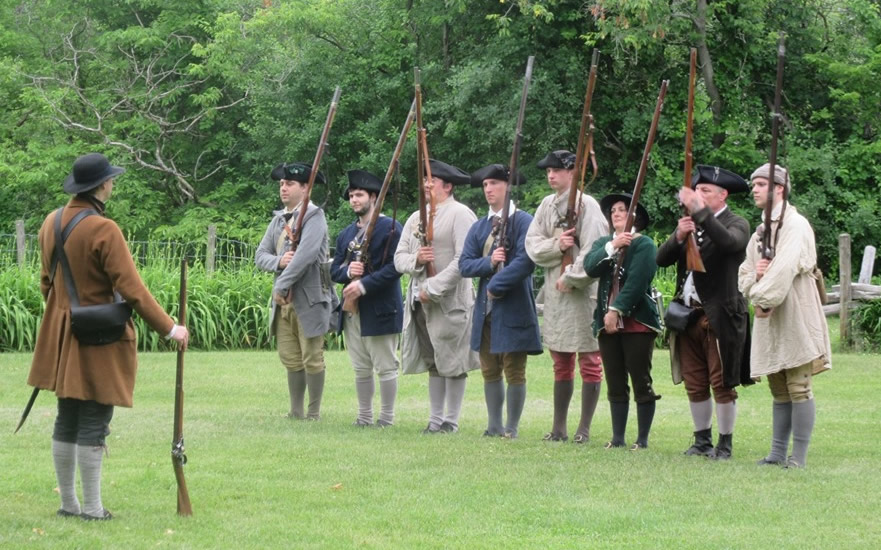
Local civilians, formed into militia units, would sometimes augment the regular army.
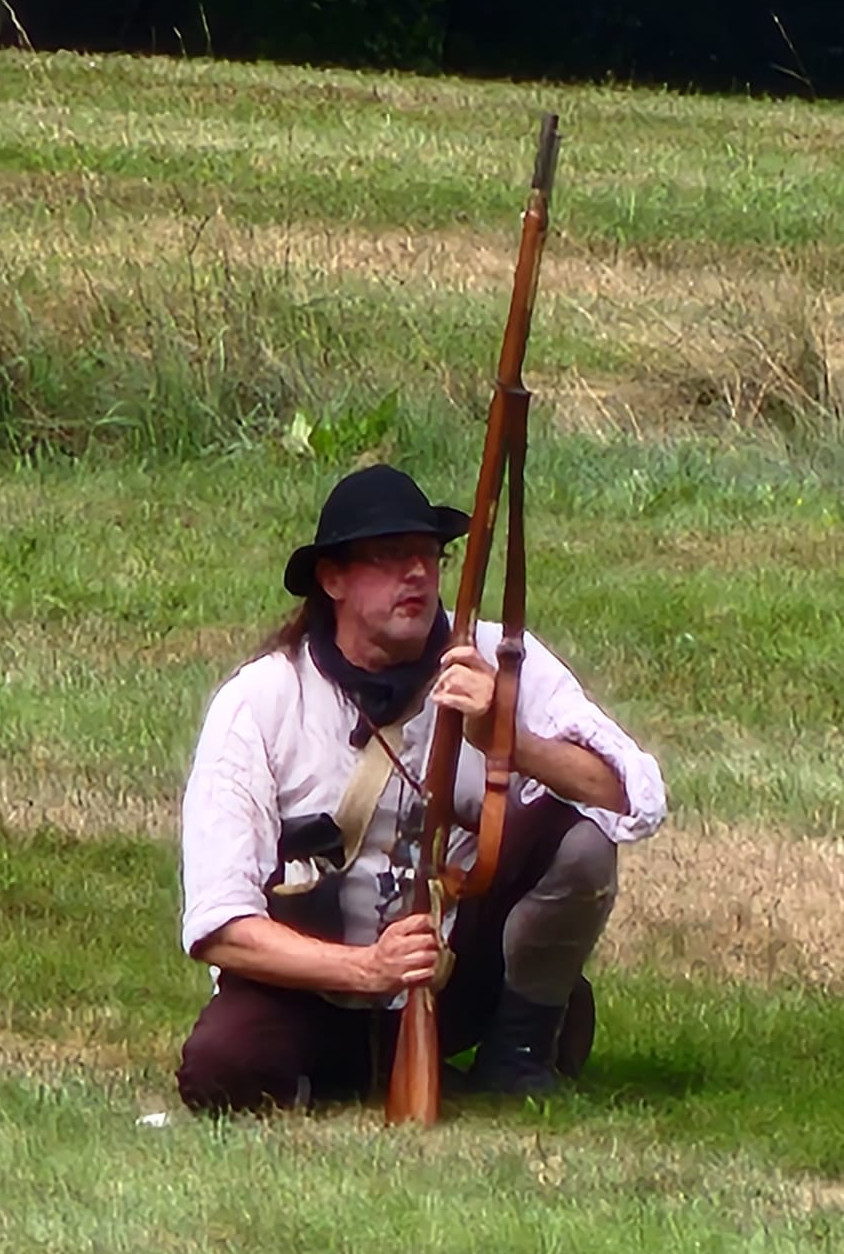
Civilian militia members wear a variety of breeches, frock coats, short jackets, farmer’s frocks, cocked hats, round hats, and knit caps.
The Regiment provides comprehensive tutorials with vetted fabrics, colors, and patterns correct for our portrayals to help you build your kit accurately. Members are expected to assemble their kit in accordance to these tutorials.
Militia Clothing
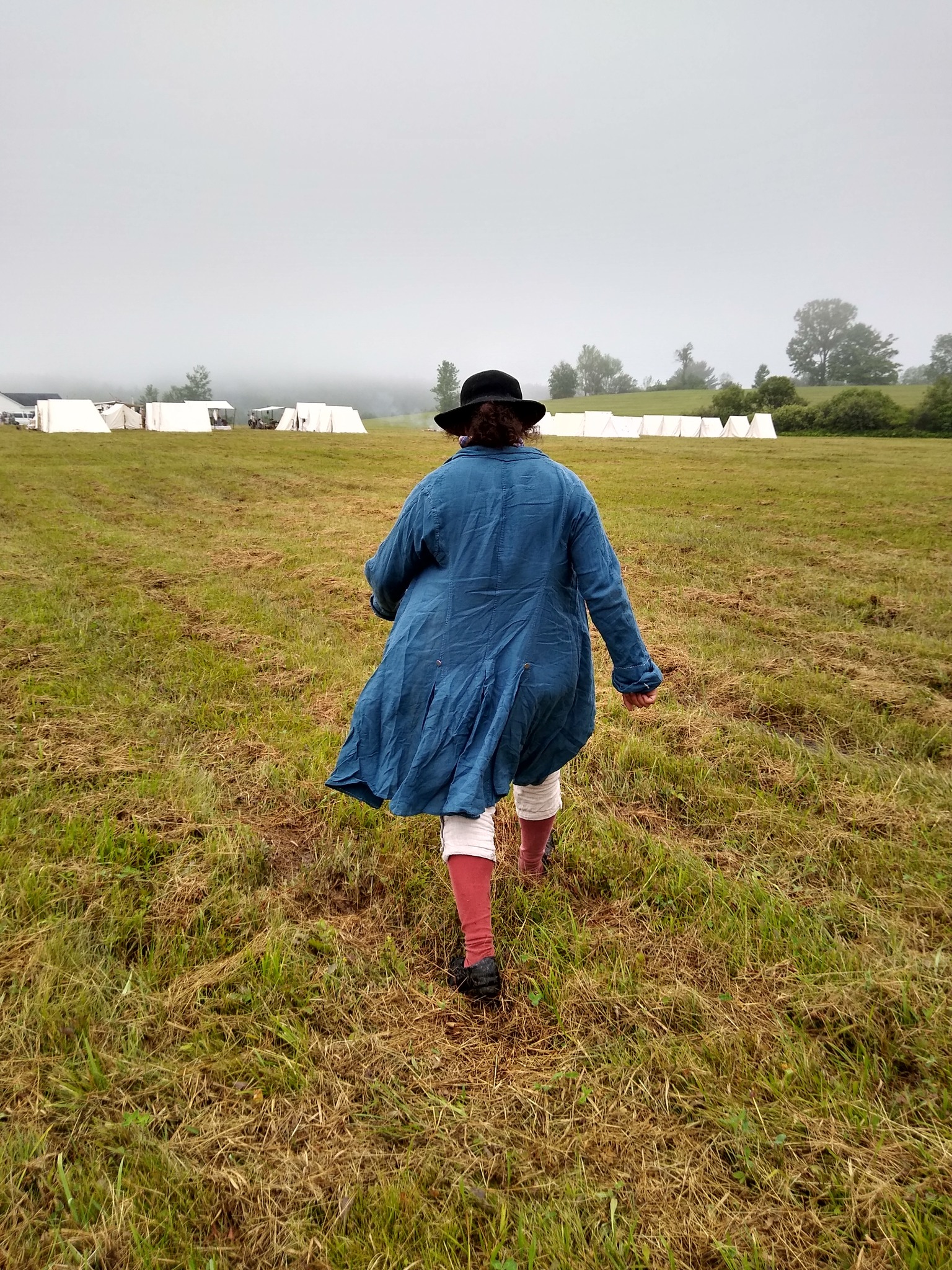
| Breeches – | Dark blue, gray, black, green, natural or oatmeal linen. Narrowfall drop front or the older button fly style. |
| Trousers – | Narrowfall drop front or the older button fly style. White, natural, ticking (white with blue pinstripes) linen or drill. Overalls were substantially less common than breeches and are not appropriate for a Regular Line soldier. |
| Shirt – | White, light brown, or checked (blue, green, brown, black, ⅛ to ¼ inch) linen. NO printed patterns. |
| Stockings – | Wool or linsey-woolsey of just about any solid color. Horizontal striped stockings are not appropriate. |
| Cocked Hat – | Black or white tie-ups & black tape trim are appropriate. |
| Waistcoat – | Sleeved or un sleeved, wool or linen. Most solid colors or stripes, with metal or cloth covered buttons. |
| Shoes – | Black leather, squared toes preferred, rough side out, may be buckled or tied. If modern shoes or boots are worn, gaiters or overalls must cover the shoes/boots. |
| Garters – | Leather garters with a brass or iron buckle. Strips of cloth or linen twill tape. |
| Frock Coat – | Tan/natural linen, brownish-greenish, blues, rust, gray, black, or yellow linen or wool. |
| Moccasins – | Center-seamed style. |
| Neckerchief – | Rolled & then tied around the neck under the collar. Size varied between 12x12” to 36x36”. Handkerchief weight linen, cotton, or silk. Solid color or checked. |
| Round Hat – | Round hats with cut down brims. |
| Knitted Wool Cap – | Monmouth or Dutch style. |
Arms & Accoutrements
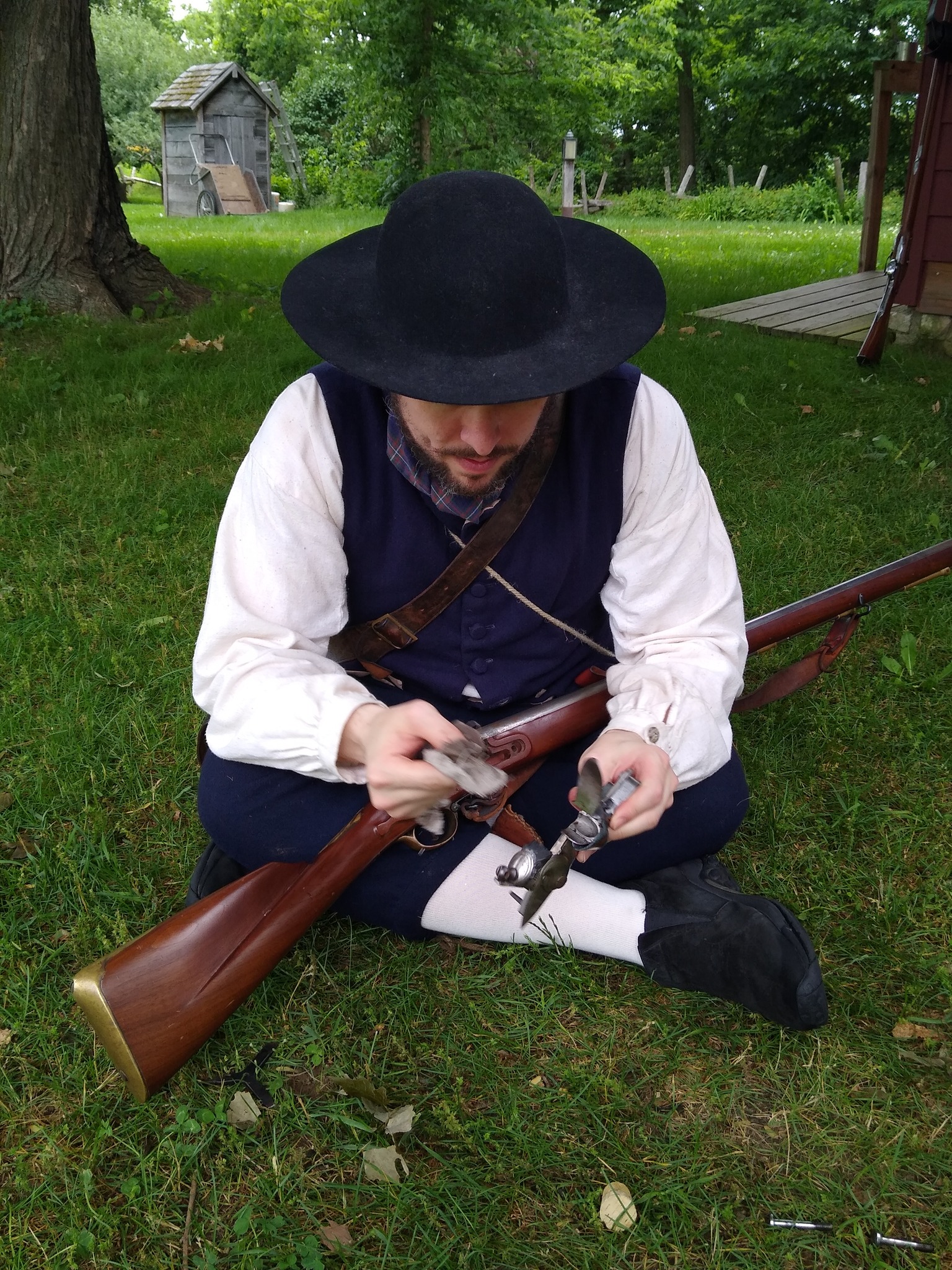
| Musket – | • English 1st or 2nd Model (Tower or Grice) Long pattern • French (Charleville) Models 1746, 1763, or 1768 • Potsdam style • Fusils & Fowlers as approved by the Commander/Sjt. Major All muskets are required to be equipped with a flash guard & hammer stall. |
| Cartridge Box or Pouch – | Leather pouch with a block drilled for 19-24 holes, suspended by a leather or linen strap with or without buckles. Straps must be stitched or nailed to the pouch. |
| Bayonet with Scabbard – | Socket style bayonet worn on either a cross or waist belt; A plug bayonet is not appropriate for our impression. Militia often did not have bayonets and the original Regiment was notoriously under supplied with bayonets. |
Equipment
| Canteen – | Wooden cheesebox style, or hollowed gourd. Canteens are a safety requirement for all outdoor events. |
| Knife – | Pocket knives were the most common, but small trade knives were often used. Bowie, "long hunter" & dagger type knives are not appropriate. |
| Weapons Cleaning Kit – |
• Cotton or linen cleaning rags. • Tow. • Threaded worm &/or hemp string. • Turnkey (screwdriver) The Pickering tool is not appropriate. • Container of brick dust. |
| Haversack – | Square off white or oatmeal linen or hemp canvas shoulder bag for carrying food items. |
| Knapsack – | White, off white, or oatmeal linen, single pouch, Uhl pattern. |
| (Market) Wallet – | A long, narrow, linen sack with a slit down the center to carry sundry personal items. With a half-twist to close the opening, it is thrown over the shoulder. |
| Blanket(s) – | One is documented (if not incorporated in a bedroll). Issued blankets were relatively light weight & natural wool color or dyed dark colors . Whitney & Hudson Bay type blankets while very warm on cold nights, are inappropriate for public display. |